
Home/Showcase glass
Display case glass,
built for the close-up.
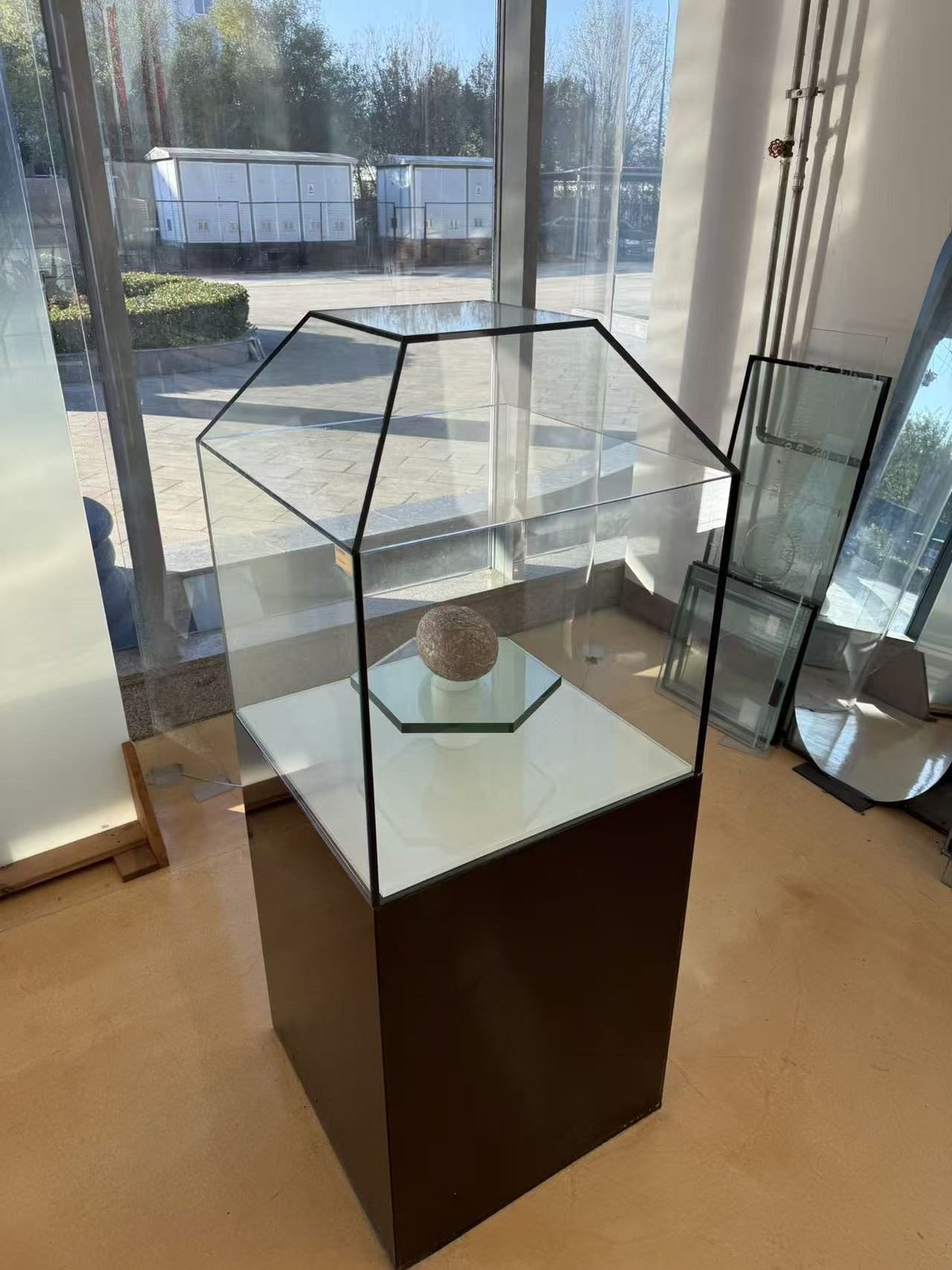
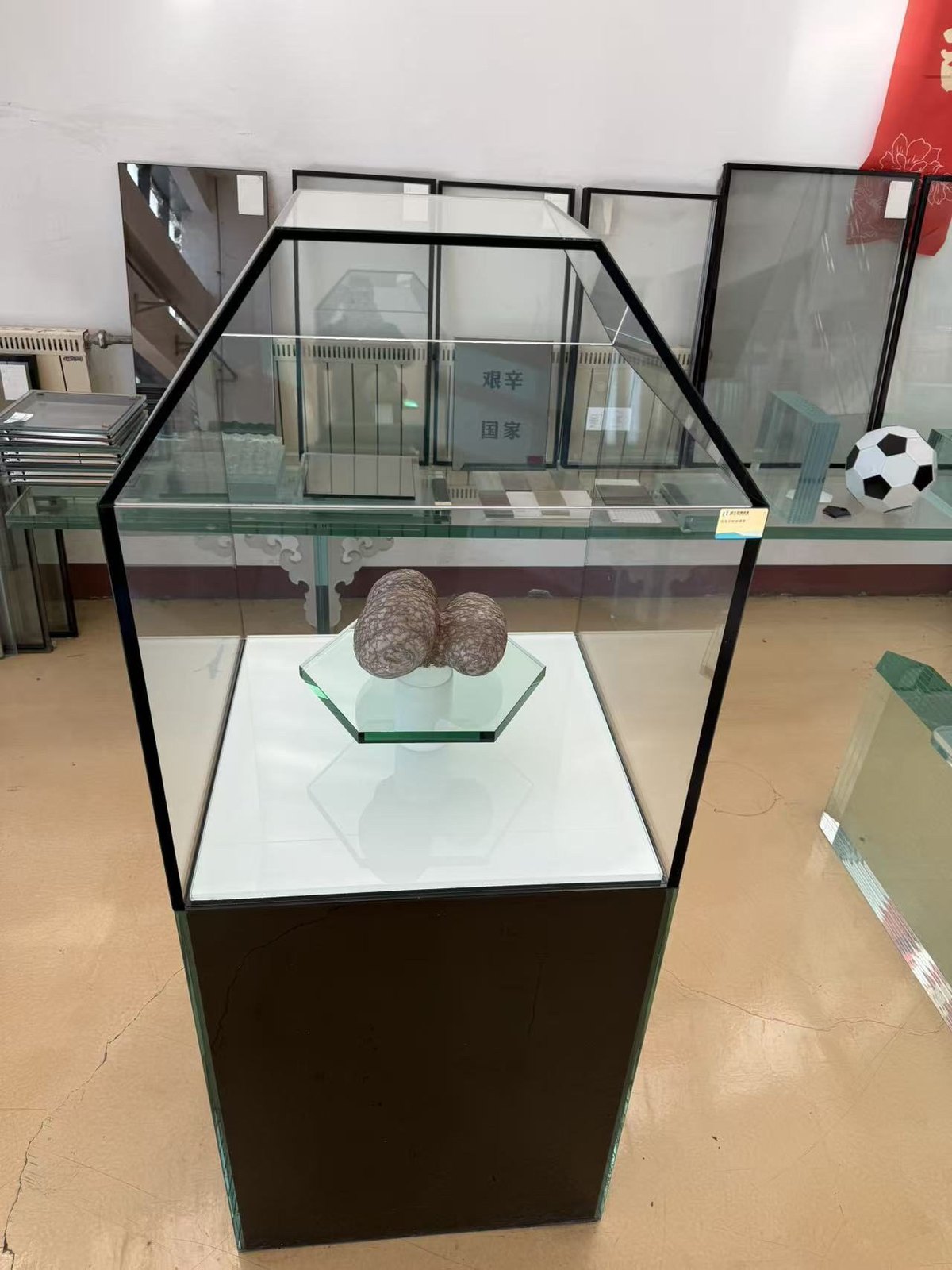
For museum vitrines, jewellery cabinets and retail displays, the case is the frame. We cut, polish, mitre and bond the display case glass that holds the object — to your drawing, not to a catalogue size.
Case types
Three forms,
one joint standard.
Every case type is produced from the same low-iron float, cut on the same table and bonded by the same operators — so a canopy and a tower vitrine match when they stand side by side.
Specification
What we can hold
to the millimetre.
Standard build-ups below. Anything outside these ranges is quoted individually — send the drawing and we will tell you honestly what the glass can and cannot do.
| Item | Standard range |
|---|---|
| Glass type | Low-iron (ultra-clear) float, clear float |
| Thickness | 6 / 8 / 10 / 12 mm monolithic |
| Laminated build-up | 5 + 0.76 PVB + 5 = 10.76 mm · SGP on request |
| Tempering | Tempered or annealed, customer's choice |
| Edgework | Polished flat · mitred 45° · arrised |
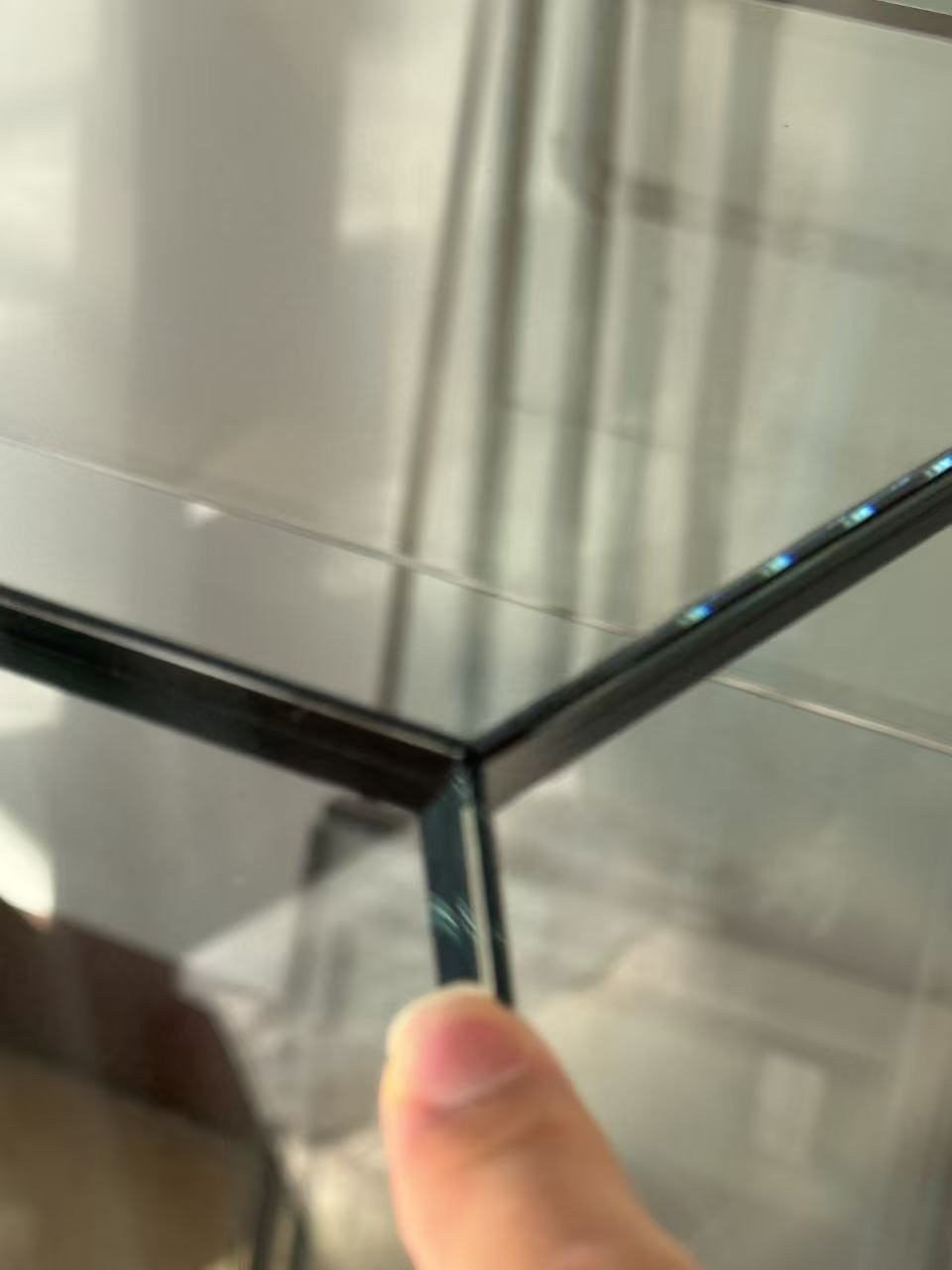
| Joint | Colourless UV adhesive, black or clear finish |
| Cutting tolerance | ±1 mm · drilled holes ±1 mm |
| Max pane | Up to 2,440 × 1,650 mm (confirm per part) |
| Coating options | Anti-reflective (AR), low-E, reflective |
| Lead time | 10 working days, standard order |
Colourless UV joint · low-iron edge
Why low-iron matters
Standard float carries an iron content that turns every edge green. On a white plinth or pale stone base, that tint is the first thing a client notices. Low-iron float keeps the edge close to colourless.
Process
From drawing to crate.
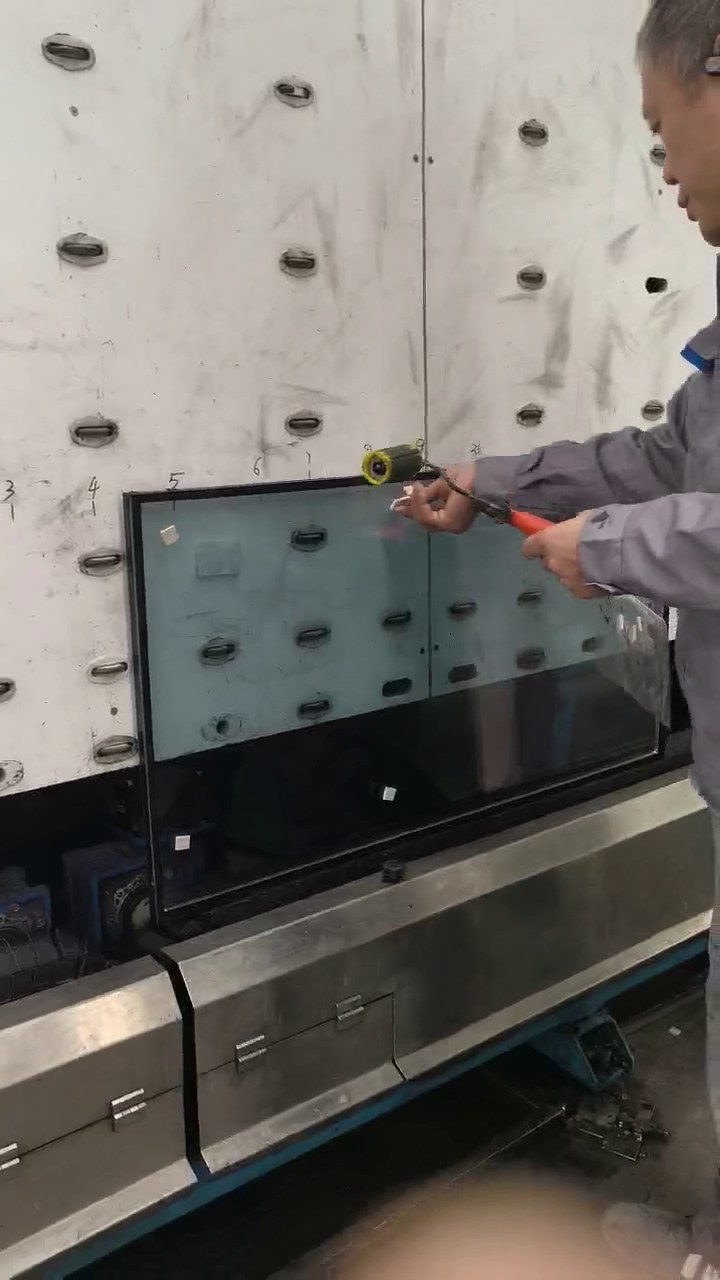
Four stages, all inside one plant. No part of your order leaves the building for processing.
Drawing review & glass build-up
We read your DXF, PDF or dimensioned sketch, confirm the build-up, edgework and hardware cut-outs, then send a shop drawing for approval before cutting.
Cutting, edging and drilling
CNC cutting to size, flat-polished or mitred edges, holes and notches drilled before tempering so nothing is stressed twice.
Tempering or laminating
Horizontal tempering furnace for safety glass; autoclave-free PVB lamination for 10.76 mm display builds.
UV bonding, inspection and packing
Corners bonded under controlled light, joints inspected against a dark background, then foam-interleaved crates with edge protection for sea freight.
Practical notes
Questions that come
up on every project.
Can you match an existing case?
Yes. Send the internal dimensions, the glass thickness and a photo of the corner detail. If the original used a mitred joint, we reproduce the mitre; if it used a butt joint with a metal corner, we keep that too.
Tempered or annealed for a vitrine?
Most retail cases use tempered glass for safety. Museum vitrines that need on-site drilling or edge adjustment often use annealed or laminated glass instead, because tempered glass cannot be modified after processing.
Do you supply the frame and hardware?
We supply glass only. Locks, hinges, metal profiles and lighting are sourced by your case-maker — we drill and notch to their template so everything seats on assembly.
How is it packed for export?
Each pane is interleaved with foam, corners protected, and the bundle crated with a moisture barrier. Cases ship EXW from our plant; we can quote packing only, or packing into your forwarder's container.
Next step
One drawing is
enough to start.
Sketch, DXF or a photo with dimensions — we will come back with the glass build-up, edgework and an EXW price.